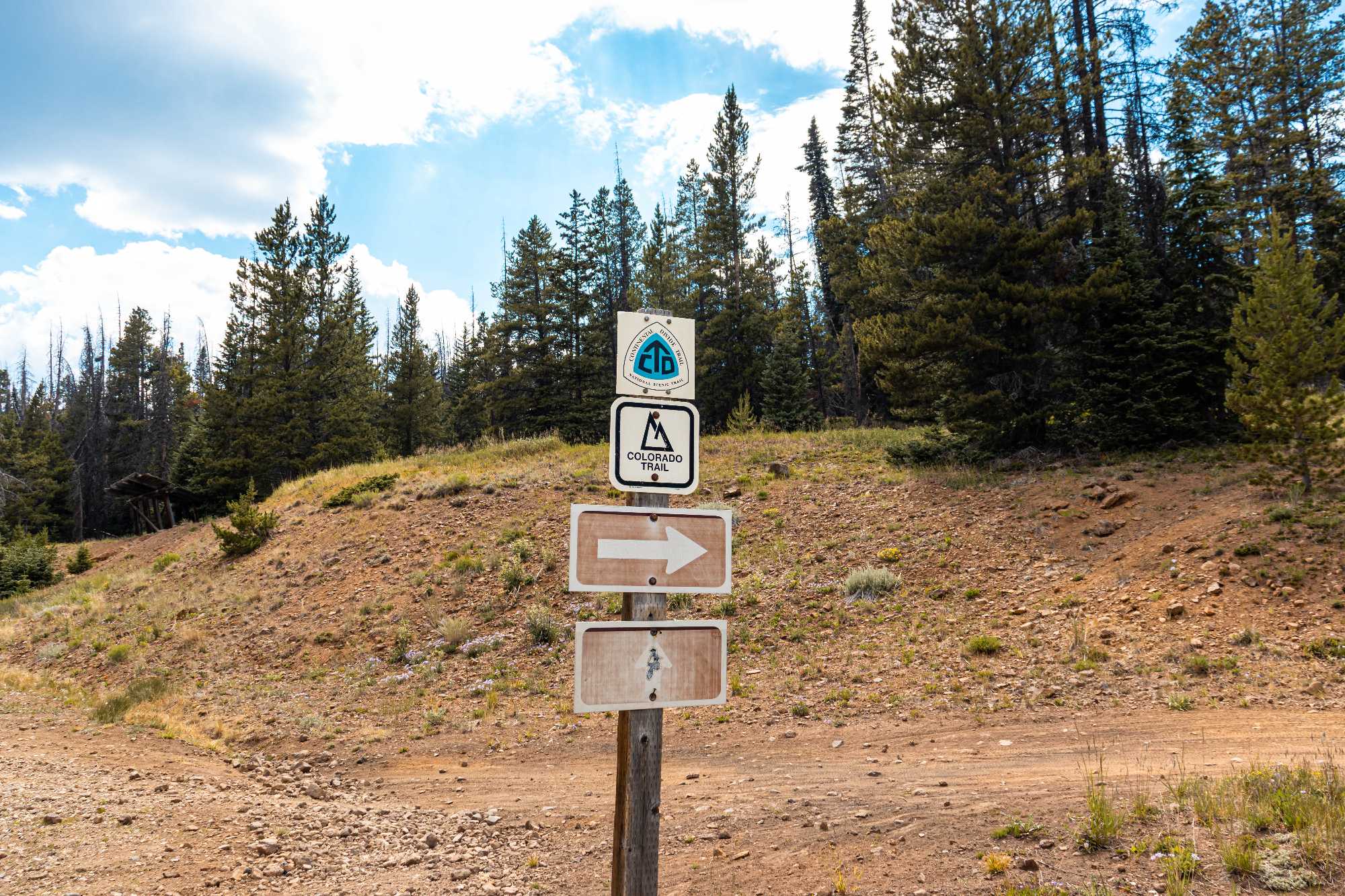
What Is the Difference Between the Colorado Trail and the Continental Divide Trail?
Colorado is home to some of the most spectacular long-distance hiking in the United States. Two of its best-known routes are the Colorado Trail and the Continental Divide Trail. Both travel through mountain landscapes, cross high passes, and provide access to some of the state's most impressive scenery.
Although the routes share portions of the same landscape, they are not the same trail. They differ in overall length, route planning, hiking objectives, and the experiences they offer.
If you are considering a multi-day hiking adventure in Colorado, understanding these differences can help you choose the experience that best fits your interests, available time, and hiking goals.
What Is the Colorado Trail?
The Colorado Trail is a long-distance hiking and mountain biking route that extends approximately 485 miles between the Denver area and Durango.
The trail crosses the Colorado Rockies through forests, mountain valleys, high alpine terrain, and remote wilderness areas. Along the way, hikers experience dramatic elevation changes, expansive mountain views, and sections that travel well above treeline.
The route is commonly divided into 28 segments, which makes it possible to plan trips around individual portions rather than attempting the entire trail in one journey.
Some hikers complete the Colorado Trail as a thru-hike, spending weeks traveling from one end to the other. Others explore selected segments through shorter backpacking trips or guided multi-day hikes.
This flexibility is one reason the Colorado Trail appeals to people with a wide range of outdoor goals. You can focus on a particular region, explore a manageable portion of the route, or work toward completing the entire trail over time.
What Is the Continental Divide Trail?
The Continental Divide Trail, often called the CDT, is a much longer long-distance route that follows the general path of the Continental Divide from the Mexican border to the Canadian border.
The complete route is approximately 3,000 miles long, although the exact distance depends on the route and alternates selected by the hiker.
In Colorado, the CDT travels through extensive mountain terrain along and near the Continental Divide. Hikers encounter high passes, remote landscapes, exposed alpine areas, and substantial elevation changes.
Unlike a route that can be understood as one fixed line from beginning to end, the CDT includes alternate routes and areas where hikers must make navigation and route-planning decisions. Conditions, access, and route options can affect the experience.
Completing the entire CDT is a major undertaking that typically requires months of travel. However, hikers can also explore individual portions of the trail through shorter trips.
How Do the Trails Compare?
The most obvious difference is length, but distance is only part of the comparison.
| Feature |
Colorado Trail |
Continental Divide Trail |
| Overall length |
Approximately 485 miles |
Approximately 3,000 miles, depending on route |
| General route |
Denver area to Durango |
Mexican border to Canadian border |
| Main focus |
A defined long-distance route through Colorado |
A long-distance route following the Continental Divide across several states |
| Trip options |
Full thru-hike or selected segments |
Full thru-hike or selected portions and alternates |
| Terrain |
Forests, mountain valleys, alpine passes, and exposed high country |
Extensive mountain terrain, remote areas, high passes, and varied route conditions |
| Planning |
Segment-based planning is common |
More extensive route planning may be necessary, especially for a thru-hike |
Both trails demand respect for altitude, weather, physical exertion, and changing mountain conditions. Neither should be judged solely by its total mileage.
A shorter trip can still be difficult if it includes steep climbs, high elevations, rugged terrain, or multiple demanding hiking days.
Do the Colorado Trail and CDT Overlap?
Yes. Portions of the Colorado Trail and Continental Divide Trail share the same general corridor in Colorado.
This overlap means hikers may encounter the same trail tread while following different long-distance routes. However, the two trails diverge in other places, and their overall destinations and route objectives remain different.
For someone planning a hiking vacation, the important question is not simply whether the trails overlap. It is which specific section offers the scenery, distance, terrain, and overall experience they want.
Always check current maps and route information before traveling. Shared trail corridors, alternate routes, access restrictions, and trail conditions can affect how a particular itinerary is planned.
Which Trail Is More Difficult?
Neither trail is automatically more difficult in every situation. Difficulty depends on the specific route, distance, elevation gain, weather, altitude, and the number of consecutive days you plan to hike.
The CDT's enormous length and remote sections create substantial challenges for thru-hikers. A long-distance journey requires extensive planning for food, water, resupply, weather, navigation, and changing conditions.
The Colorado Trail is shorter, but that does not make every section easy. Hikers can encounter sustained climbs, high passes, rugged terrain, and elevations where physical exertion feels more demanding.
A short guided trip on either trail may be much more manageable than attempting a full thru-hike, but you still need to select an itinerary that matches your abilities.
When comparing trips, look beyond the trail's reputation. Review daily mileage, elevation gain, terrain, and the amount of recovery time available between hiking days.
Which Trail Is Better for a Guided Hiking Trip?
That depends on what you want from your Colorado adventure.
The Colorado Trail is an appealing option if you want to explore a defined portion of a famous long-distance route without committing to a multiweek journey. Its segment-based structure makes it possible to experience substantial mountain hiking within a scheduled vacation.
A guided trip on a portion of the CDT can appeal to hikers who specifically want to experience the Continental Divide and its surrounding mountain landscapes.
Colorado Mountain Expeditions offers guided Colorado Trail treks and select hiking trips in Colorado's mountain terrain. The best choice depends on the available itinerary, your hiking experience, and the type of landscape you want to explore.
Before registering, compare the actual trip details rather than assuming that every route associated with either trail has the same difficulty or scenery.
What Is Different About a Supported Colorado Trail Trek?
A traditional backpacking trip generally requires hikers to carry their overnight camping equipment, food, and other supplies along the route.
Colorado Mountain Expeditions' Colorado Trail treks use a different approach. Guests hike with daypacks while CME transports camping equipment between campsites.
This allows guests to experience multi-day hiking without carrying a full overnight backpack throughout the hiking day. Guides prepare hot breakfasts and dinners, and shared camp spaces provide a place to relax after hiking.
Guests remain responsible for their personal hiking essentials and for setting up and taking down their own sleeping tents. The trips still involve significant physical exertion, mountain weather, and altitude, so the itinerary should match your abilities.
This supported format can be especially attractive to people who want to experience the Colorado Trail without independently organizing every camping and logistical detail.
How to Choose Your Next Colorado Hiking Adventure
Start by identifying how much time you have and what you want to experience.
If you want a multi-day mountain adventure within a planned vacation, a guided trip on a selected portion of the Colorado Trail may be a good fit. If following the Continental Divide is your primary goal, investigate the available CDT itineraries and compare their specific routes and requirements.
Consider these questions before booking:
-
How many days can you spend hiking?
-
What daily mileage and elevation gain are appropriate for you?
-
Do you want a supported trek or a self-sufficient backpacking trip?
-
Which mountain regions and landscapes interest you most?
-
How will you manage transportation, equipment, food, and overnight arrangements?
Answering these questions will help you focus on the experience that best fits your goals.
Explore Colorado's Long-Distance Trails
The Colorado Trail and Continental Divide Trail both offer extraordinary opportunities to experience Colorado's mountains. The Colorado Trail provides a defined route between the Denver area and Durango, while the CDT forms part of a much longer journey along the Continental Divide.
You do not have to hike thousands of miles to enjoy either trail's scenery. Exploring a selected portion can provide a memorable mountain adventure without the time commitment of a full thru-hike.
Ready to explore Colorado on foot? Visit Colorado Mountain Expeditions to review available guided Colorado Trail treks and compare trip itineraries, difficulty, and registration details.
Disclaimer: This article was written with the assistance of artificial intelligence (AI) and may contain errors or outdated information. Trail distances, routes, access, and conditions can change, so verify current information using official trail resources before planning a trip. Before undertaking strenuous hiking at altitude, consult a qualified healthcare professional if you have concerns about your health or fitness. For route planning, navigation, and outdoor safety, consult a qualified outdoor professional and follow current official guidance.